Welcome to the UK, where people will happily tell you they hate waiting, then spend twenty minutes discussing whether everyone is waiting in the correct order.
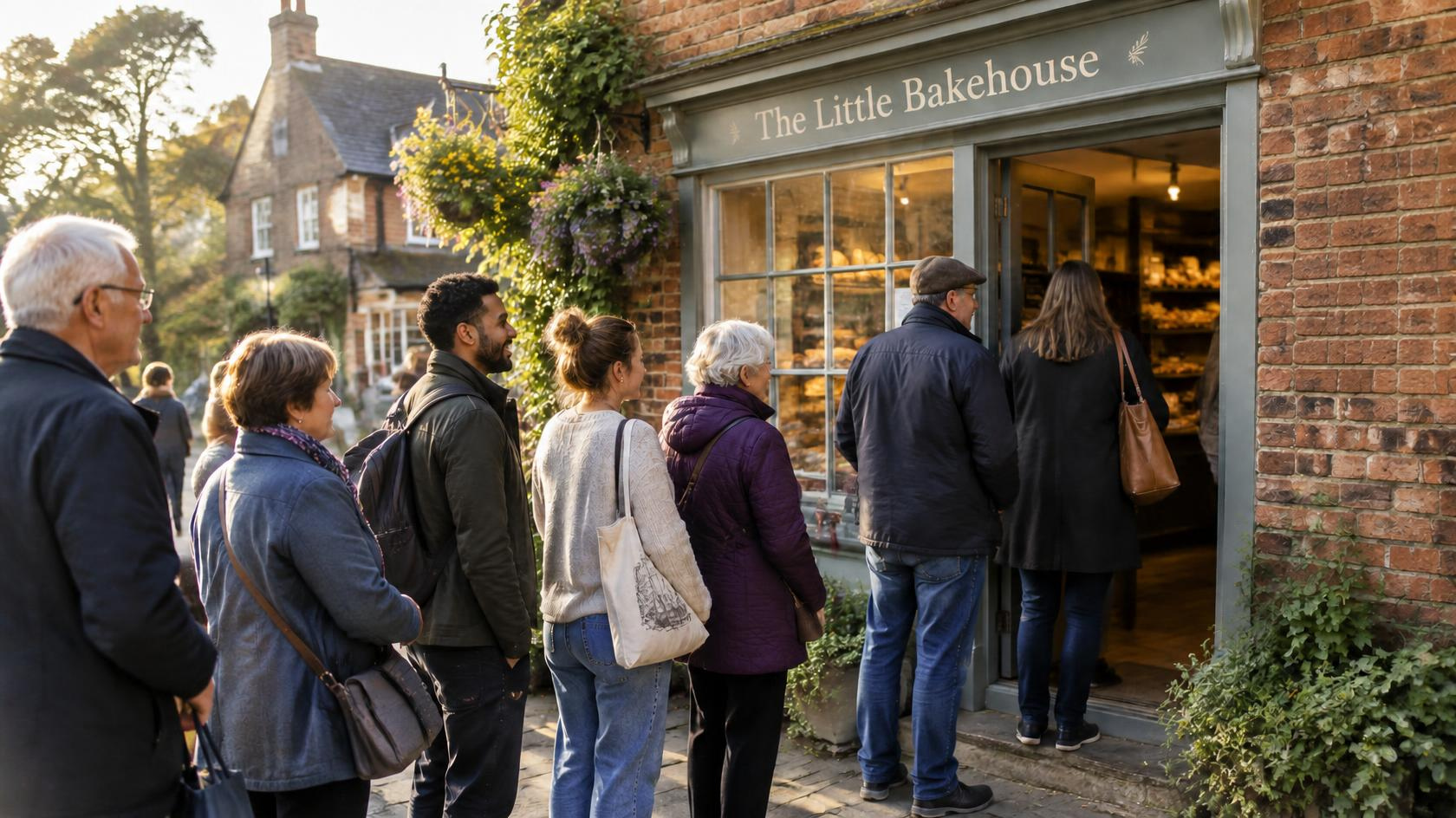
You’ll find queues at bus stops, supermarket checkouts, attractions and anywhere somebody has suggested there might be cake. Occasionally, you’ll see a queue before you can see what it’s for. Approach carefully. It could be an excellent bakery or replacement bus transport.
For visitors, the rules can seem mysterious. Here’s how to join in without becoming the subject of a very pointed conversation on the journey home.
Why do Brits queue?
The basic idea is fairness: if you arrived first, you should usually be served first.
A queue gives everyone a turn without requiring a competition involving elbows, speed or whose auntie knows the manager. It makes busy places easier to navigate and lets people wait with some confidence that they’ll eventually reach the front.
It also provides a shared activity: quietly assessing how slowly everything is moving.
Of course, people across the world queue. Britain hasn’t patented standing behind somebody. But orderly queuing is a familiar part of British everyday life, and jumping ahead can be taken as a sign that you consider your time more valuable than everyone else’s.
That rarely wins friends.
Step one: find the end
In a straightforward queue, join behind the last person.
This sounds easy until the queue bends around a shelf, disappears through a doorway and ends beside a man who might simply be choosing biscuits.
If you’re unsure, ask:
“Are you in the queue?”
“Is this the end?”
“Are you waiting to be served?”
These are perfectly normal questions. Nobody expects you to arrive with specialist training in queue detection.
And yes, you may receive the answer, “I think so.”
You’re all learning together.
Step two: leave a sensible gap
Stand close enough to show you belong to the queue, while leaving people comfortable personal space.
You do not need to breathe directly onto somebody’s neck. They’re waiting for a sandwich, not an unexpected romantic development.
Equally, leaving enough room for a small delivery van may make it unclear whether you’re queuing at all.
Move forward as space becomes available. A brief distraction is normal; if the entire queue has advanced into another postcode, put your phone away.
Step three: wait your turn
Don’t slip into a gap near the front and hope nobody notices.
Someone probably noticed before you’d finished deciding to do it.
Reactions vary. You might hear a polite “Excuse me, there’s a queue,” a firmer objection, or nothing at all. Silence doesn’t necessarily mean people think it was fine.
If you make an honest mistake, a quick “Sorry, I didn’t realise” and a move to the back will usually sort it out. There’s no need to explain your entire travel itinerary.
Beware the invisible queue
Some queues are more of an understanding than a formation.
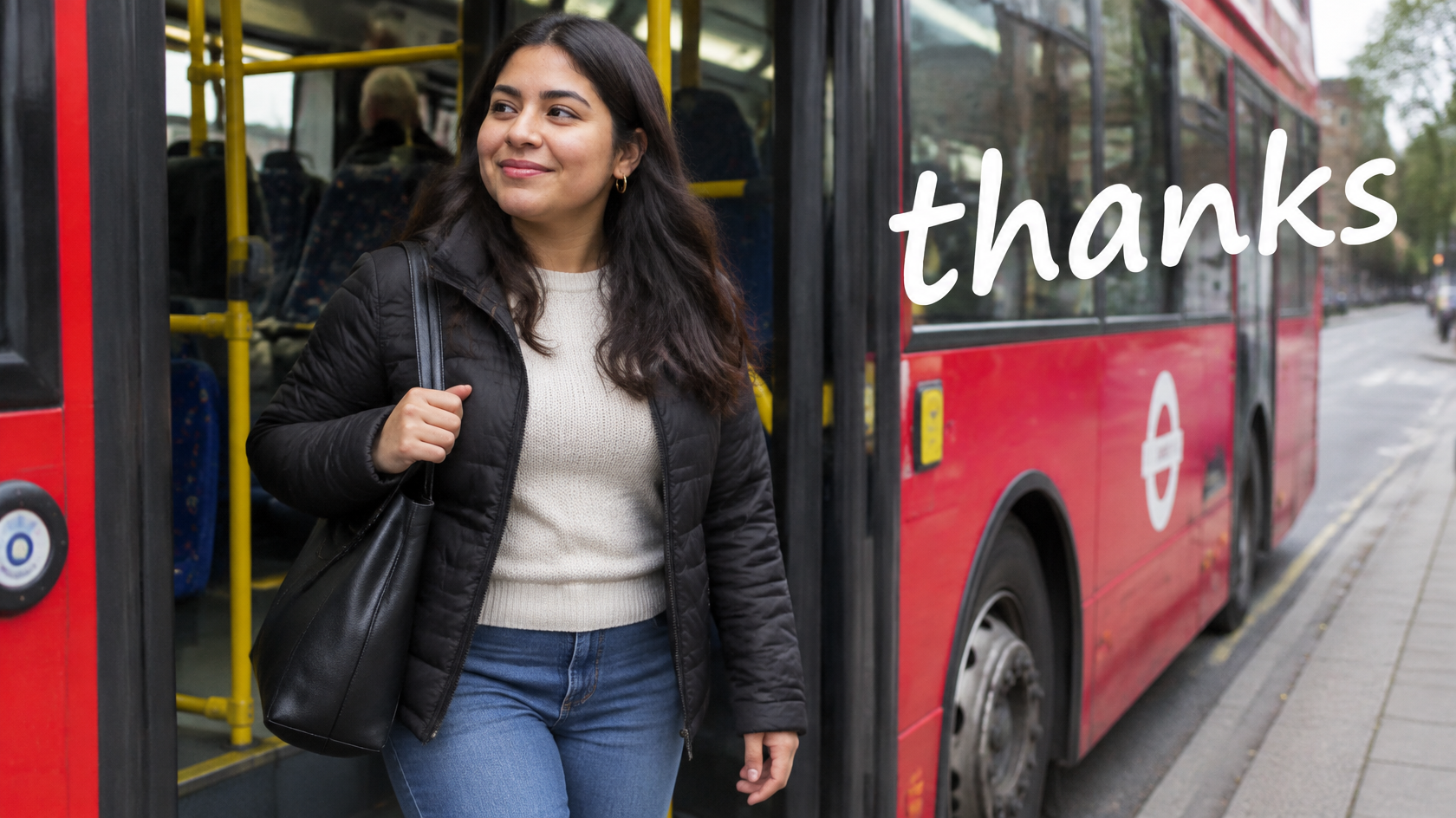
At a bus stop, people may be scattered around the shelter. When the bus arrives, there’s often an expectation that those who were waiting first will board first, although the arrangement can be loose. Watch what’s happening, leave space for people getting off and ask if you’re unsure.
At a pub bar, there may be no physical line. The staff will usually try to keep track of who arrived when. Wait patiently, make yourself visible and avoid waving money about as though you’re attempting to land a helicopter.
If someone beside you was there first, “They were before me” is a useful contribution.
You have upheld fairness. Your pint will follow.
Sometimes the system is different
Look for signs before committing yourself to standing somewhere.
You might need to take a ticket, check in at reception or join one shared queue serving several counters. Someone arriving after you may have an appointment, a priority booking or another reason to be called first.
A queue is an organising system, not proof that every person ahead of you has committed a personal betrayal.
If you’re confused, ask a member of staff.
Can you let someone go ahead?
Absolutely.
Letting someone with one item ahead of your overflowing supermarket trolley is a friendly gesture. So is making room when someone needs assistance.
If a friend joins you, consider how it affects everyone behind. There’s a difference between someone returning after briefly stepping away and six extra people appearing with separate orders.
When in doubt, check rather than announce, “They’re with me,” with the confidence of a nightclub owner.
Why does it matter?
Queuing is a small way of sharing public space. Everyone has places to be; taking turns helps keep things fair and predictable.
You don’t have to master every unwritten rule immediately. Find the end, ask when unsure and treat other people’s time with the same respect you’d like for yours.
Then you can enjoy the full British experience: waiting patiently while wondering aloud why they haven’t opened another till.