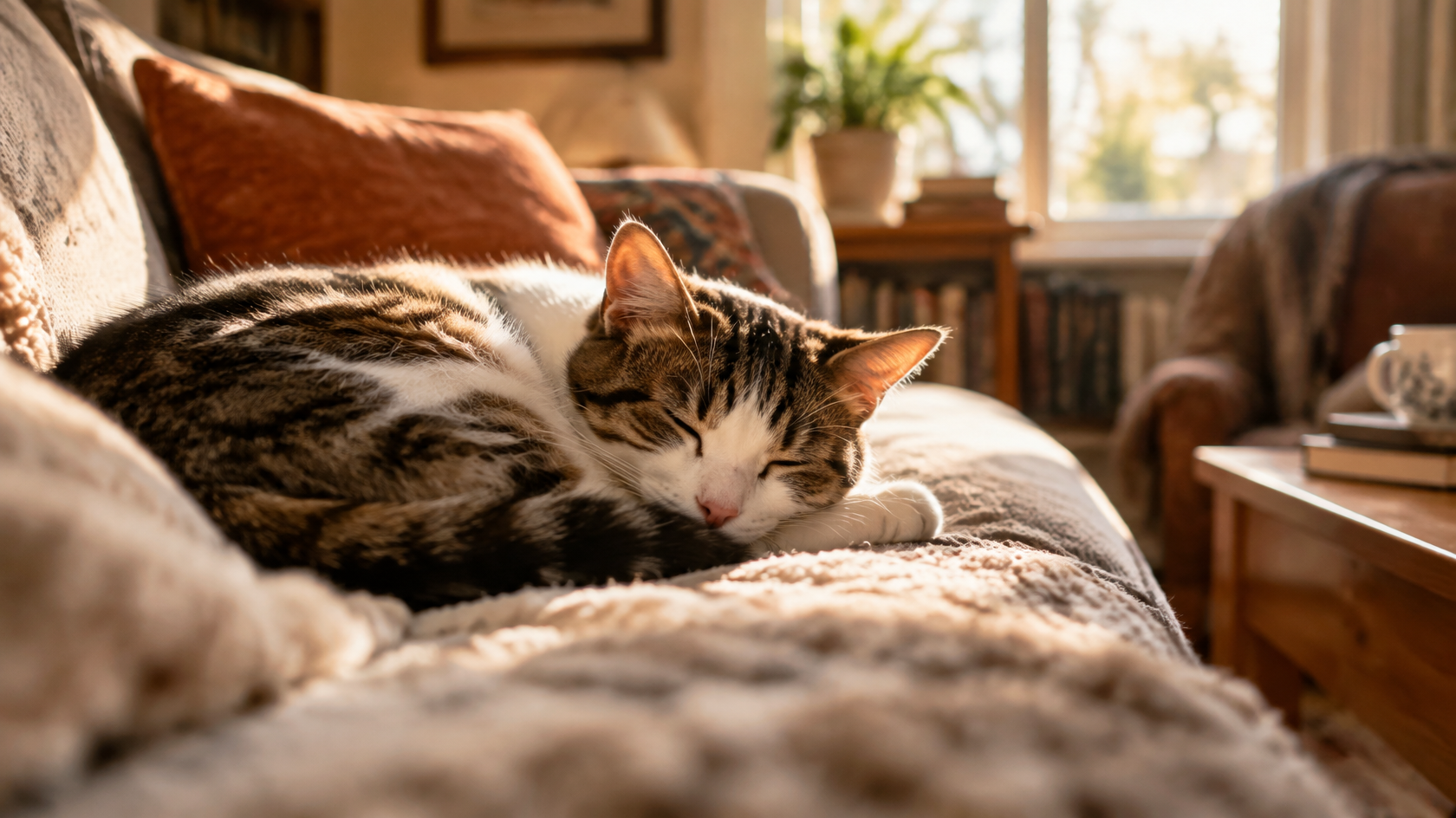
Visit a British home and you may be offered a cup of tea, a biscuit and an apology about where you’re allowed to sit.
“Sorry, that’s the cat’s chair.”
There are four chairs in the room. The cat weighs roughly the same as a bag of potatoes. Nevertheless, negotiations have concluded, and you’ll be sitting somewhere else.
Welcome to Britain’s love affair with pets, where animals become family members, acquire strong opinions through their owners and somehow end up receiving Christmas presents despite having no interest in the calendar.
Mischief, our resident feline contributor, would like to clarify that she is interested in Christmas. Specifically, the turkey.
Are we really a nation of animal lovers?
Britain has a strong reputation for loving animals, and pets are a familiar part of life in many households. Dogs, cats, rabbits, guinea pigs, birds and other companions all have their devoted admirers.
Of course, not everyone has a pet, and not everyone wants one. You can enjoy living here without sharing your home with something that sheds on your trousers.
But spend time chatting to pet owners and you’ll quickly discover that animals provide an almost unlimited supply of conversation.
Ask someone how their dog is and you may receive an update covering digestion, friendships, sleeping arrangements and a recent disagreement with a wheelie bin.
Ask how the owner is and they’ll say, “Fine, thanks.”
The dog has the more developed storyline.
Why do people love their pets so much?
Companionship is a large part of it. Animals bring company, familiar routines and plenty of small moments that make a home feel lived in.
A dog might greet you enthusiastically after work. A cat might briefly open one eye to confirm that the catering department has returned.
Both can mean a great deal.
Pets also give people something to care for and activities to share. Walks, playtime and quiet evenings together become part of daily life.
Then there’s the entertainment. You can pay for several streaming subscriptions and still spend your evening watching a cat investigate a paper bag.
Mischief considers this live theatre and would appreciate appropriate funding.
The pet is a member of the family
In many homes, pets are included in birthdays, festive celebrations and family photographs.
You may notice a dog’s stocking hanging beside the children’s, a framed cat portrait on the mantelpiece or a birthday cake made specifically for an animal who would have been equally delighted with its usual dinner.
Pet names can add to the confusion.
If your host shouts, “George! Stop licking that!” don’t immediately assume there’s a badly behaved uncle in the kitchen.
Wait for further evidence.
Meanwhile, animals themselves often collect several names: their actual name, an affectionate nickname and the full formal title used when something has gone missing from a plate.
“Mischief” is a greeting.
“MISCHIEF, WHAT HAVE YOU GOT?” is an investigation.
We hold entire conversations with them
You may hear a pet owner asking:
“What have you been doing today?”
“Did you miss me?”
“Why are you looking at me like that?”
“Have you already been fed?”
That last question is often directed at both the animal and every other human in the house. Some pets develop considerable skill in presenting themselves as victims of an administrative failure.
Owners also supply the replies.
“He says he’s hungry.”
“She says you’re in her seat.”
“He doesn’t like that man on the television.”
The animal may have offered nothing beyond a blink, but its representative has released a full statement.
Mischief has reviewed this section and says the translation service is generally reliable, although “I’ve had enough treats” has never been an authorised statement.
Dogs can make strangers talk
British reserve can weaken considerably in the presence of a friendly dog.
People who might hesitate to speak to a stranger will confidently ask:
“What’s their name?”
“How old are they?”
“Can I say hello?”
Sometimes the human introductions never happen. Two people can meet regularly for months and know each other exclusively as “Bertie’s mum” and “the man with the spaniel”.
Bertie, meanwhile, has an extensive local network.
If you’re visiting, ask before approaching or stroking someone’s dog. Some dogs need space, and assistance dogs should be allowed to work without distraction.
A friendly conversation with the owner is welcome enough without immediately trying to become the dog’s new best friend.
Cats have a different management style
Dogs may encourage their humans to get outside. Cats can persuade them to remain completely motionless.
“I can’t get up. The cat’s asleep on me.”
This is delivered as though a binding legal restriction has come into force.
Tea goes cold. Phones remain just out of reach. Someone desperately needs the toilet, but the cat looks comfortable.
There may be a luxurious pet bed nearby. The cat has chosen a cardboard box, a clean jumper or the one piece of paperwork needed urgently.
Mischief would like it recorded that expensive beds are appreciated. The boxes they arrive in are particularly thoughtful.
What visitors should know
If you’re invited to a home with pets, a little communication makes everything easier.
Mention allergies or a fear of animals beforehand. A considerate host would rather know than discover you’re spending the evening nervously monitoring a Labrador.
Ask before touching, picking up or feeding an animal. A pet approaching you doesn’t automatically want a cuddle, and food from your plate may be unsuitable.
Follow the owner’s instructions about doors and gates, too. “Please keep that shut” may be the only thing standing between a peaceful afternoon and six people searching the street with a packet of treats.
And if you don’t want a pet on your lap, you can say so politely. Being a guest doesn’t require you to become additional furniture.
Mischief has requested that guests declare available lap space upon arrival. We have explained that this remains optional.
Loving pets means looking after them
Behind the funny photographs and dramatic accounts of stolen sandwiches, keeping a pet involves time, money and regular care.
Food, suitable exercise, enrichment, cleaning, veterinary attention and arrangements for holidays all need thought. Different animals have different needs, and affection works best when it comes with an understanding of those needs.
The cute part gets photographed. Cleaning up an unexpected mess before breakfast receives considerably less publicity.
People who cannot keep pets may still enjoy supporting animal charities, helping someone