You’re looking at a British pub menu when you spot a ploughman’s lunch.
It sounds substantial. Possibly something involving potatoes, gravy and a well-earned sit-down after a morning in a field.
Then it arrives: cheese, bread, pickle and a selection of other cold things arranged on a plate.
Have they forgotten to cook it?
No. Your lunch is complete. Pull up a chair and find somewhere sensible to begin with the cheese.
What actually comes with it?
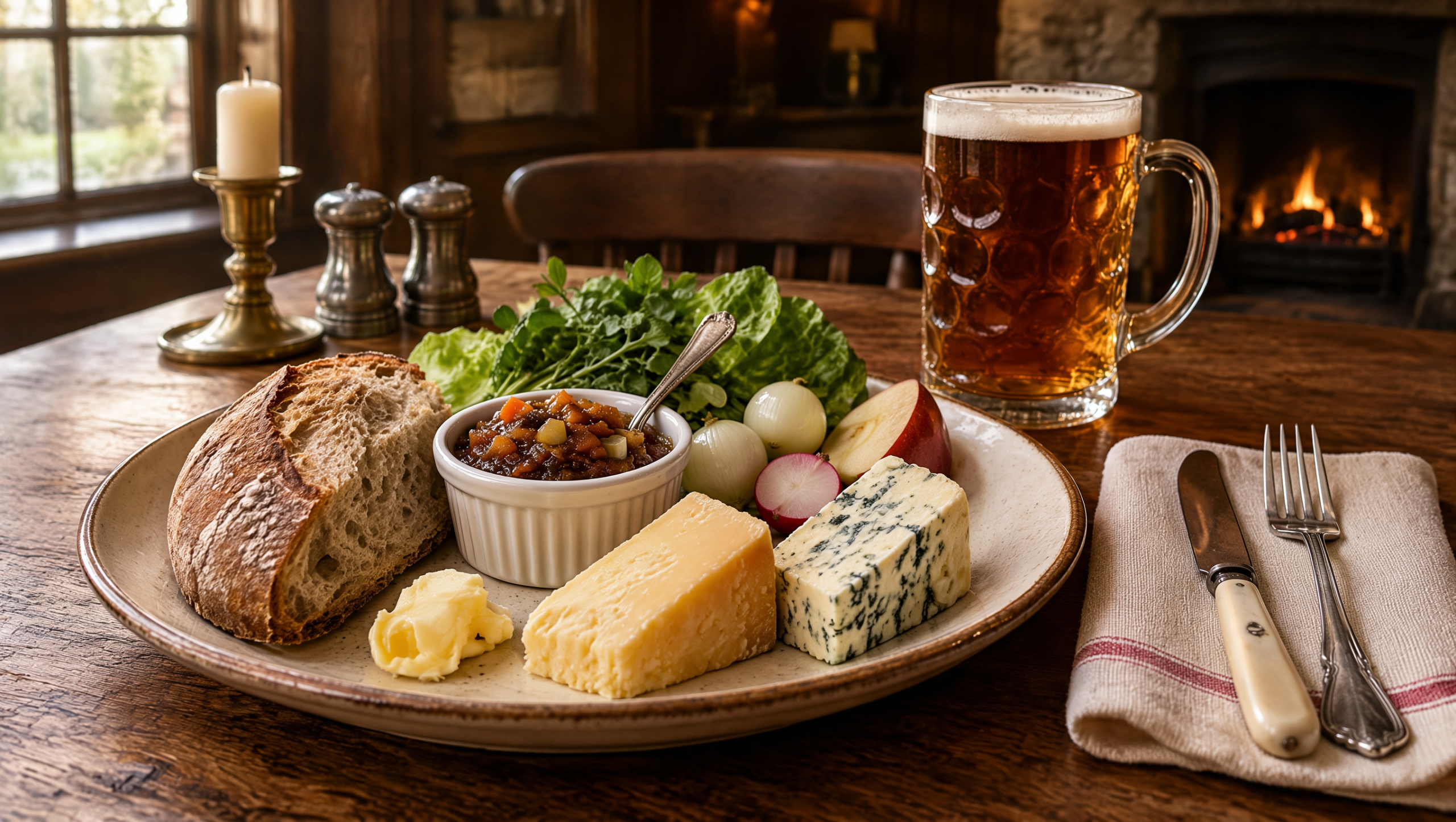
A ploughman’s lunch is a cold meal built around bread, cheese and accompaniments, usually including some form of pickle or chutney.
There isn’t one fixed version that every pub must follow. Depending on where you order it, you might find:
- A generous piece of cheese.
- Bread or a crusty roll.
- Butter.
- Pickle or chutney.
- Pickled onions.
- Salad.
- A piece of apple.
Some versions add ham, pork pie, a boiled egg or other extras. Read the menu description rather than assuming everything on that list will appear.
One pub may serve a fairly simple plate. Another may bring a wooden board large enough to require a small rearrangement of the table.
The cheese is doing a lot of the work
The cheese is usually the main attraction, so this is a good meal to order when you actually fancy eating some.
Cheddar is a familiar choice, although menus may offer other cheeses or a selection.
Look for a description that tells you what you’re getting. “Local cheese” sounds appealing, but you can ask which one it is, particularly if you have a strong preference.
A ploughman’s should give you enough cheese to enjoy with the bread and other bits. You don’t want to spend the final ten minutes eating plain bread while remembering the cheese fondly.
If a menu offers a choice, pick something you enjoy rather than something you feel you ought to appreciate.
Lunch is a poor time to discover you’ve committed to a large portion of your least favourite cheese.
What’s the pickle for?
The pickle or chutney brings a sharp, sweet or tangy contrast to the cheese and bread.
The word “pickle” can cause a little confusion. You might be picturing a pickled cucumber, but the menu could mean a chopped vegetable pickle served as a condiment.
There may also be pickled onions on the plate. These are a separate contribution to proceedings and can be quite assertive.
Try a little of each accompaniment before applying it generously. A small amount might be exactly what your mouthful needs.
An entire pickled onion followed by a determined expression is also an option, but you’re allowed to take your time.
How do you eat it?
However you comfortably manage it.
There’s no special assembly method you need to learn before ordering.
You can butter the bread and add cheese and pickle. You can make small open sandwiches. You can eat a little cheese, then some bread, then a piece of apple.
Use your knife and fork where they help. Picking up bread is perfectly reasonable.
The only real challenge is distributing everything so you don’t finish one ingredient long before the others. This becomes more complicated if someone across the table keeps asking for “just a little bit” of your cheese.
Agree your boundaries early.
Is it a sandwich?
Usually, you’re given the ingredients separately rather than an assembled sandwich.
That gives you control over each mouthful and lets you combine things as you go.
You may also see a ploughman’s sandwich on a menu or in a shop. That takes some of the same flavours—often cheese, pickle and salad—and puts them between slices of bread.
If you’re ordering from a pub menu, check whether you’re choosing the plated lunch or the sandwich. Both are valid lunches, but they can be quite different in size and presentation.
Is it enough for a proper lunch?
It certainly can be.
Bread and cheese can make a filling meal, particularly when the portions are generous and there are extras alongside them.
But the name alone won’t tell you how substantial it is. Read the description, look at the available options and ask if you’re unsure.
If you’re particularly hungry, find out what comes with it before automatically ordering chips. You may need them. You may also discover you’ve purchased enough lunch to occupy the rest of the afternoon.
A ploughman’s is especially appealing when you fancy something cold and unhurried: a pub garden lunch, perhaps, or a break during a day out.
Is it vegetarian?
A cheese-based version may be suitable, but don’t assume every ploughman’s is vegetarian.
Some include meat, and the suitability of the cheese and other ingredients needs checking too.
If you have dietary requirements or allergies, ask the pub about the specific dish. Removing a slice of ham doesn’t answer every ingredient question.
The same applies if you’re avoiding dairy or gluten. Bread and cheese are central to the usual plate, so find out what alternatives are available before ordering.
How to choose a good one
Start with the ingredients rather than the presentation.
Does the menu name the cheese? Does the bread sound like something you’ll enjoy? Are the accompaniments things you actually want to eat?
Check what’s included in the advertised price, especially if there are optional additions.
A straightforward plate of good bread, cheese and pickle may suit you better than a more elaborate version padded out with extras you don’t fancy.
And while a wooden board can look lovely, an ordinary plate with room to cut your bread has its own quiet appeal.
Ready to order?
If you enjoy cheese, bread and tangy accompaniments, a ploughman’s lunch is an easy dish to get acquainted with.
Read the menu, check any ingredients that matter to you and don’t worry about constructing the perfect mouthful.
Then settle in and enjoy it.
Just remember that if you order it because you “only fancy something small”, the person delivering the enormous board may have other news.