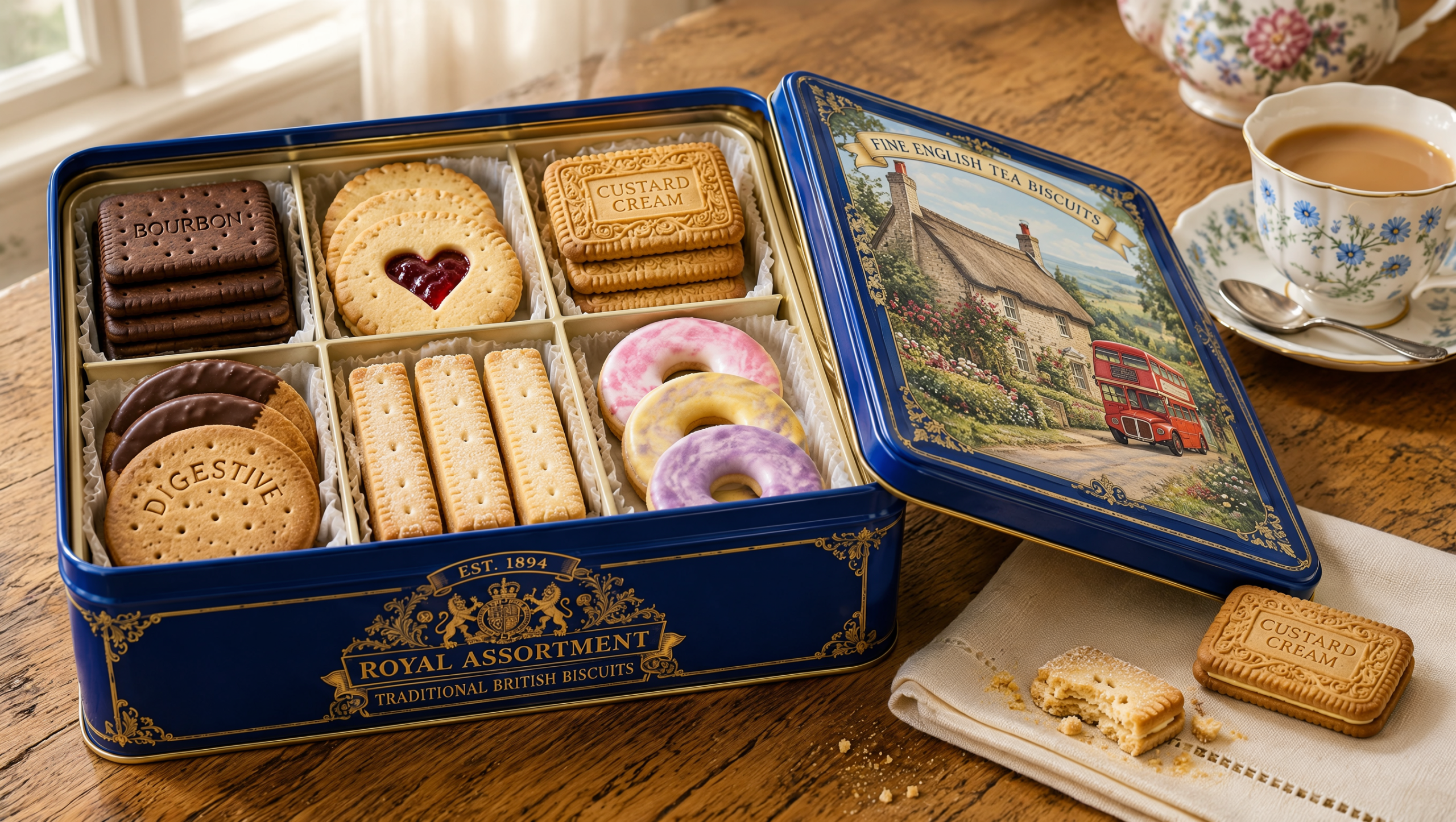
Someone offers you a cup of tea.
You say yes.
Then comes the follow-up: “Would you like a biscuit?”
You were expecting a small snack. Instead, a tin arrives containing several possibilities, a few crumbs and one biscuit that appears to have lost a disagreement with the lid.
Which should you choose? Can you take two? And why does the tin say shortbread when there’s clearly a custard cream inside?
Pull up a chair. There are a few things to explain.
The tin cannot always be trusted
Your first lesson is to separate the container from its contents.
A handsome shortbread tin may contain shortbread. It may also contain assorted biscuits bought at the supermarket and emptied in together.
Elsewhere in the house, a similar tin could contain sewing supplies, old photographs or enough spare buttons to open a small haberdashery.
Check before committing.
If someone places the tin beside your tea, your chances of finding biscuits are good. If you discover it in a cupboard while looking for a charger, proceed with an open mind.
And if it contains sewing equipment, put the lid back carefully. You’ve found a different department.
Meet a few familiar faces
Biscuit selections vary between households, but these are some names you’re likely to encounter.
The digestive
A round, crumbly biscuit with a gently sweet, wheaty flavour.
The plain digestive is happy accompanying a cup of tea without demanding much attention. Its chocolate-covered relative is equally at home on a plate, though perhaps slightly less likely to be left until last.
Expect crumbs. A digestive can look perfectly intact while quietly depositing evidence down your jumper.
The rich tea
Light, crisp and relatively plain, the rich tea is a familiar choice for people who enjoy a simple biscuit.
It also attracts confident dunkers.
Watch someone lower one into tea and you may notice their expression change from relaxed conversation to intense concentration. Timing has suddenly become important.
The custard cream
Usually rectangular, with a patterned biscuit on either side of a sweet, custard-flavoured filling.
You can eat it whole, nibble around the edges or attempt to separate the layers.
The last method introduces an engineering challenge. Sometimes the biscuit parts neatly. Sometimes you’re left holding three fragments and pretending that was your plan.
The bourbon
A chocolate-flavoured sandwich biscuit with a chocolate-flavoured filling.
Recognisable, dependable and capable of disappearing from a shared tin without anyone remembering taking the final one.
If you’re offered a bourbon, you’re being offered a biscuit. The drinks cabinet can remain closed.
The ginger nut
A crisp, firm biscuit with a ginger flavour.
It brings a little more spice to proceedings and requires a purposeful bite. Some people enjoy dunking it; others prefer the crunch exactly as it comes.
Either way, it’s unlikely to pass unnoticed.
Shortbread
Buttery, crumbly and perfectly capable of making a very small serving feel like a proper treat.
It comes in different shapes, including fingers and rounds, and benefits from being eaten over a plate.
You may believe you’re catching all the crumbs. Your trousers may have a different account.
How many can you take?
There’s no national biscuit allowance.
If someone offers you the tin, choosing one is a straightforward place to start. If they say, “Go on, have another,” you can generally accept without launching negotiations.
Taking a modest couple from a generous selection is a different proposition from gathering six into your palm while asking whether they’ve had a nice week.
With a shared plate, notice how many people are being served. Leave enough for others to have a choice.
You don’t need to count every biscuit. A little awareness will do.
The last biscuit creates a moment
One biscuit remains.
You want it.
Someone else may also want it, but everyone is suddenly very interested in their tea.
“Does anyone want the last one?” is a useful way forward.
If everyone declines, you can take it. You have made the offer. The biscuit has been given a fair hearing.
Sometimes another person suggests splitting it. This works better with some biscuits than others. A clean break is pleasant; chasing half a custard cream across the coffee table is less dignified.
Dunking is optional
Dunking means dipping a biscuit into your drink before eating it.
Some people love the softened texture. Others would prefer their biscuit and beverage to remain separate.
Both approaches are available to you.
If you try dunking, start briefly. Biscuits behave differently, and leaving one submerged while you finish a story can end with part of your snack sitting at the bottom of the mug.
At that point, you must decide how attached you are to the biscuit.
There’s no graceful recovery procedure that works every time.
The office biscuit tin is a shared resource
At work, biscuits may arrive for a meeting, a birthday or simply because someone remembered to buy them.
Check whether they’re being offered around before helping yourself. A packet beside someone’s lunch may belong to that person, however invitingly it’s positioned.
If you regularly enjoy the communal supply, bringing something in occasionally is a friendly gesture. It doesn’t need to be expensive or elaborate.
And if you finish the packet, deal with the packaging. Leaving an empty sleeve in the tin creates a brief burst of hope followed by a small disappointment.
Nobody needs that at half past three.
Fancy biscuits may make a separate appearance
Some households keep a particular box for visitors, celebrations or Christmas.
These may arrive arranged in little compartments, with chocolate coatings, wafers and a helpful illustration showing what’s what.
Take a moment to look if you want to. Choosing a biscuit doesn’t have to be a test of decisiveness.
If you’re buying some to take when visiting, a packet you think your host will enjoy is a perfectly good offering. Check dietary needs where relevant rather than assuming everyone can eat the same selection.
You’re ready for the tin
Accept the tea if you fancy it. Pick a biscuit you like. Leave a choice for the next person and keep an eye on anything you’ve dipped in your mug.
You’ll soon develop preferences of your own.
Then one day someone will offer you a beautifully decorated tin, and you’ll lift the lid with quiet confidence.
Buttons.
Still worth checking.